Frequently asked questions.
(extracts from the General Osteopathic Council website).
On this page we aim to provide answers to your questions about the regulation of osteopathy, standards of training and practice, how to find an osteopath, what to expect when you see an osteopath and what to do if you have concerns about an osteopath or your treatment.
To help us do this, we list below some of the questions we are most frequently asked, along with the answers.
Self Care
Purpose of treatment: To produce a pumping effect on a particular tissue of the body by expansion (heat) and contraction (cold). This removes the toxins & waste and encourages nutrients to aid healing mechanism.
Take a cold pack from freezer (peas or other alternative frozen item may be used) and hot pack from microwave (hot water bottle may be used)
Ensure both packs are covered with a tea-towel or other thin material to avoid cold/hot burn
Apply Cold pack for 2 minutes then remove
Follow immediately with hot pack for 2 minutes then remove and reapply cold for 2 minutes redoing steps above 3 times finishing on a cold pack then stop for 15 mins.
Perform above steps 3 times per day for maximum effect.
History of osteopathy
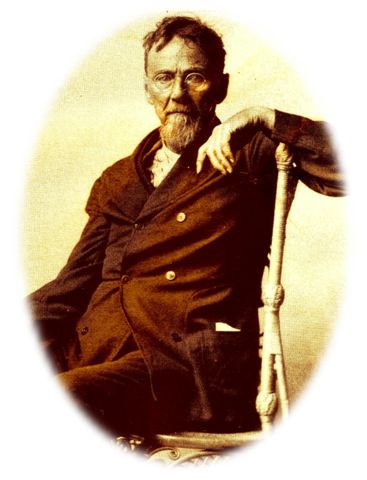
Dr. Andrew Taylor Still and the Founding of Osteopathy
Dr. Andrew Taylor Still of Missouri, USA, founded Osteopathy in 1874. Trained in conventional medicine, Dr. Still became disillusioned with the barbaric medical practices of the time, such as operations without anesthesia and blood-letting. This led him to research and develop alternative forms of treatment.
The Origins of ‘Bone Setting’
Dr. Still initially practiced as a ‘Lightening Bone Setter’, a skill that was already more common in the UK. The Matthews Family in the Midlands, for example, had a long history as bone setters dating back to 1680. Dr. Still’s success in treating medical conditions with his unique approach drew patients from far and wide, leading him to set up boarding houses to accommodate them.
The Establishment of Osteopathic Education
Dr. Still refined his approach and established the first osteopathic school, the American School of Osteopathy (ASO), in Kirksville, Missouri. This institution still exists today, albeit in a different form.
Osteopathy in the United Kingdom
One of the ASO’s students, John Martin Littlejohn, returned to the UK after completing his studies and began teaching in 1898. This eventually led to the establishment of the British School of Osteopathy (BSO) in 1917 in Buckingham Gate, London. The school moved several times before settling on Borough High Street, where it remains today. The two largest osteopathic colleges in the UK are the European School of Osteopathy and the University College of Osteopathy, which was formerly the British School of Osteopathy.
Modern Osteopathy
Today, the osteopathic profession in the UK is recognized by the government and regulated by the General Osteopathic Council.
The two largest colleges of UK osteopathic education are currently the European School of Osteopathy and the University College of Osteopathy {formerly British School of Osteopathy)
The profession is currently recognized by government and regulated by the General Osteopathic Council