Information for patients
Everything you need before your visit.
What to expect, answers to common questions, and how to find us. If you cannot find what you are looking for, please call us.
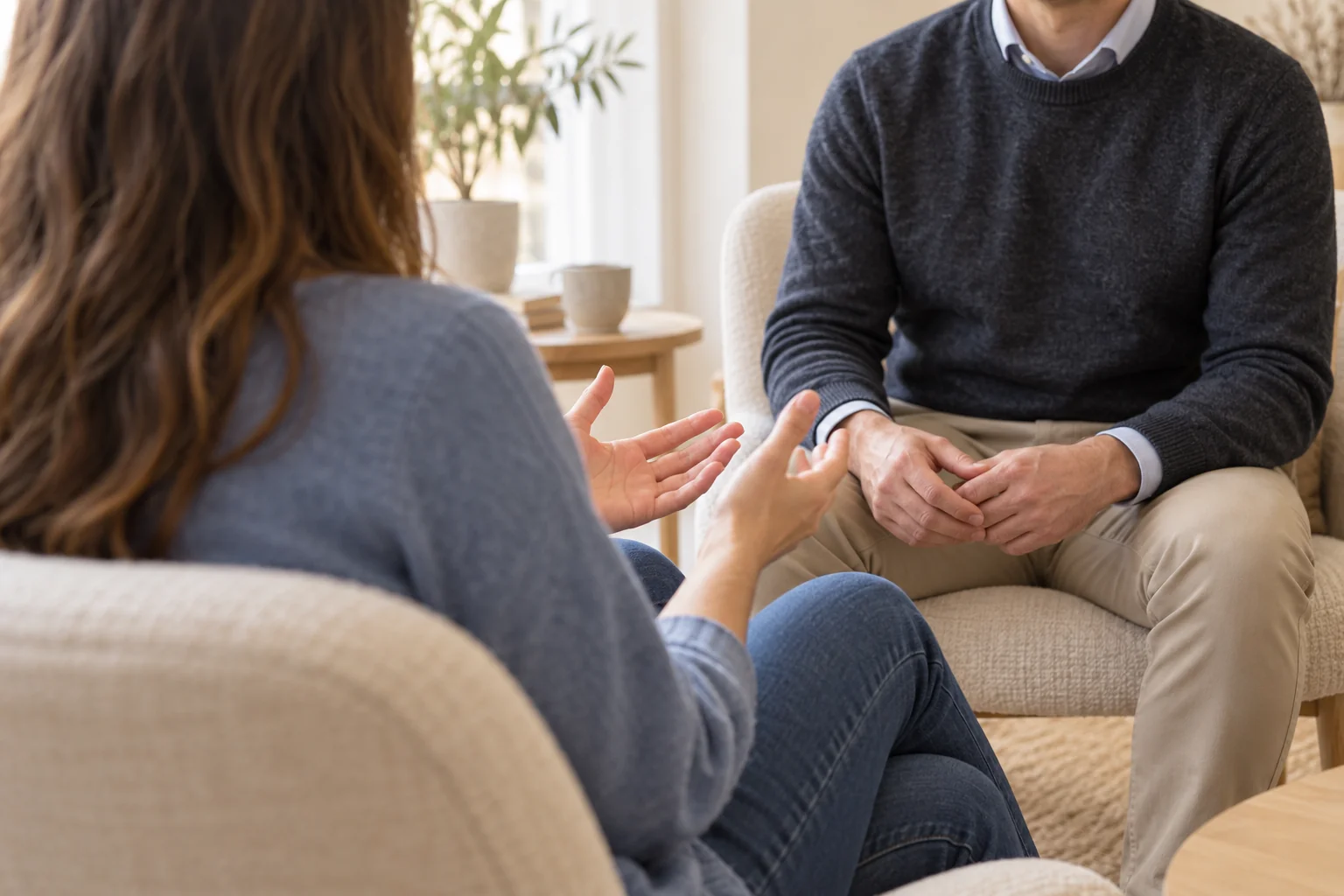
AI-generated illustrative image.
What to expect
What happens when you visit an osteopath.
Osteopathy is a patient-centred system of healthcare. A first appointment generally lasts about 45 minutes to an hour.
Listening and examining
Your osteopath listens and asks about your problem, your general health, and any other medical care or medication, and records this in your case notes. What you share is confidential. They will examine you properly, which may mean removing some clothing. Please note, you may be asked to undress to your underwear. If you do not feel comfortable doing so, please wear clothes you can easily move in to your appointment. You may bring a chaperone to your appointment.
Diagnosis and treatment
Your osteopath will provide you with a clear explanation of your problem. They will outline their current plan, and this will evolve as treatment progresses.
Ongoing care
It is not unusual to feel sore for the first 24 to 48 hours after treatment, and your osteopath will explain what to expect. It may take more than one visit to resolve your problem. Your progress is reviewed at every visit and your osteopath will inform you of any change to their approach.
Do I need a referral?
No need for a GP referral. Should we need to write to your GP, we will always ask you first.
Your osteopath will also check for signs of serious conditions they cannot treat, and may advise you to see your GP or go to hospital. Adapted from the General Osteopathic Council.
Questions
Frequently asked questions.
Some answers are adapted from the General Osteopathic Council website.
Before you visit
Do GPs refer their patients to osteopaths?
Yes. GPs may refer you to an osteopath when they think it would help. Many people also book directly, without a GP referral.
Can I find out how long an osteopath has been registered?
Yes. The first registration date appears in Practitioner Details on the General Osteopathic Council Register.
Who sets the standards of training and practice?
The General Osteopathic Council sets standards of training and practice. It is the statutory regulator for osteopaths under the Osteopaths Act 1993.
Do I need a GP referral to see an osteopath?
No need for a GP referral. Should we need to write to your GP, we will always ask you first.
Can I see an osteopath through the NHS?
Currently, access to osteopathy on the NHS is limited, but services are becoming more widespread as the benefits are recognised. To find out whether NHS treatment is available in your area, speak to your GP or see the NHS website at nhs.uk.
Can I claim on my private medical insurance?
Many private health insurance policies provide cover for osteopathic treatment. It may be possible to claim for a course of treatment, but check in advance with your insurance company to confirm the available level of cover and whether you will need a referral from your GP or a specialist. Clarissa is registered with BUPA and Maria with WPA.
How can I pay for my treatment?
You can pay by cash or card. We accept credit and debit cards, including American Express.
Your appointment
What can I expect on my first visit?
When you come into the clinic you’ll be asked to complete a general health questionnaire, next of kin details and also to read and sign a consent for treatment form. Please bring a note of any medication you might be on and also any traumas or operations you’ve had in the past. Following this, the osteopath will review your forms with you, taking a full case history, then assess and treat you.
Please note, you may be asked to undress to your underwear. If you do not feel comfortable doing so, please wear clothes you can easily move in to your appointment.
You may bring a chaperone to your appointment.
How long do appointments last?
In general, the first treatment lasts about 45 to 60 minutes and subsequent treatments around 45 minutes. Your first appointment is slightly longer to allow for a full case history.
Do you treat babies?
Absolutely. Our osteopaths are trained to treat people of all ages, including babies. We use gentle techniques, always take a full history first, and will refer you to your GP or health visitor if anything needs medical attention. You are welcome to feed your baby during or after the appointment.
I have a new baby. Can I bring them with me?
Absolutely. We are a family practice and will do our best to treat you while accommodating your baby’s needs.
I’m pregnant. Can I have osteopathic treatment?
Yes. We see lots of pregnant people. Your osteopath will take a full case history and adapt their treatment to make sure you are comfortable throughout.
What do osteopaths treat?
Osteopathy focuses on the diagnosis, management, treatment and prevention of musculoskeletal and other related disorders, without the use of drugs or surgery. Commonly treated conditions include back and neck pain, postural problems, sporting injuries, muscle and joint deterioration, restricted mobility and occupational ill-health.
What is osteopathy?
Osteopathy is a primary care profession, focusing on the diagnosis, treatment, prevention and rehabilitation of musculoskeletal disorders and the effects of these conditions on patients’ general health. Its patient-centred approach means symptoms are considered in the context of your full medical history, your lifestyle and personal circumstances, so that treatment is tailored to you.
Registration, training and concerns
How do I know if an osteopath is registered?
All osteopaths must be registered with the General Osteopathic Council. You can use the Register to check whether your health professional is currently registered, and the date they first registered.
Can anyone call themselves an osteopath?
No. The title “osteopath” is protected by law, and only those on the Register are entitled to practise as osteopaths. Unregistered practice is a criminal offence in the UK.
What training do osteopaths have?
Undergraduate students follow a four or five year degree course combining academic and clinical work. Qualification generally takes the form of a bachelor’s degree in osteopathy (BSc (Hons), BOst or BOstMed) or a master’s degree (MOst). Many osteopaths continue their studies after graduating.
What is CPD?
CPD stands for Continuing Professional Development. All osteopaths must complete at least 30 hours a year, which demonstrates to the General Osteopathic Council that they are fit to practise and meet the relevant professional standards.
What should I do if I have concerns about my osteopath or my treatment?
We take all feedback seriously, and want to know if you are not happy with your treatment. Please get in touch by leaving a message with our reception team on 01580 212293, by emailing complaints@moatosteopaths.com, or by writing to our Practice Manager at The Moat Practice, 12A Station Road, Robertsbridge, East Sussex. We will acknowledge your complaint and aim to respond within 7 days. If you cannot resolve the issue with us, the General Osteopathic Council can advise on its formal complaints procedure.
Self care
Cold and hot therapy.
Alternating cold and warm packs can help ease muscle stiffness and discomfort.
The aim is to produce a pumping effect on a particular tissue of the body, by expansion (heat) and contraction (cold). This helps remove waste and encourages nutrients in, to aid the body’s healing mechanisms.
Prepare your packs
Take a cold pack from the freezer (frozen peas work well) and a hot pack from the microwave (or use a hot water bottle). Cover both with a tea towel or other thin material, to avoid cold or heat burns.
Alternate
Apply the cold pack for 2 minutes, then the hot pack for 2 minutes, then the cold pack for 2 minutes again. Repeat this cycle three times, finishing on the cold pack, then rest for 15 minutes.
Repeat
Do this three times a day for the best effect.
Getting here
In the centre of Robertsbridge.
Next door to Robertsbridge Village Stores, and a minute’s drive from the A21, with easy access from Battle, Hastings and Tunbridge Wells.
Visit
12A Station Road, Robertsbridge, East Sussex, TN32 5DA
Call
01580 212293
Monday to Friday 08:30 to 18:00, Saturday 08:30 to 12:30
appointments@moatosteopaths.com
Outside reception hours, please email us.
Parking
Parking is available outside the clinic for those with mobility issues. Otherwise, parking is available on the road, or in the village car park at the High Street end of Station Road. Alternatively, you may park on Willow Bank, which is first left after the humpback bridge (please note you cannot park on Willow Bank between 10 and 11am each day).
Support group
Moat Breastfeeding Support
Every Wednesday, 10:30am to 12pm, at Robertsbridge Youth Centre. Meet other mums and get support, with a lactation consultant (IBCLC) in attendance at all sessions unless stated.
Find out more
Different people. Same goal.
Still have a question?
Call 01580 212293, or ask us to call you back.